Professional fashion photography is one of the most powerful tools to build branding and strengthen brand positioning. We know that in the fashion universe, every detail communicates. And when we talk about images, we talk about power — the power to move, to differentiate, and to sell.
Imagery is not just aesthetic; it is a force that inspires, critiques, motivates, and reshapes perceptions. In fashion, images are the bridge between brand and audience, capable of creating loyalty and awareness externally, while also motivating employees internally with a shared vision or cause.
As Adobe Blog explains: “Imagery has the power to inspire, critique, motivate, and change perceptions. It can be a powerful external marketing tool that elicits consumer loyalty and brand awareness and can also be an effective internal tool that motivates company employees in a new vision or shared cause.”
This perspective reinforces that fashion photography is not only about showing clothes — it is about shaping meaning, building identity, and aligning both consumers and teams around a brand’s vision.
According to ABComm, Brazilian e-commerce grew 16% in 2024, the largest increase worldwide. In this competitive scenario, product photography is essential. As Cronoshare highlights: “To stand out in this sea of stores, it is necessary to present striking and well-executed images.”
In fashion e-commerce, professional photos not only show products but create desire. They directly influence conversion rates and customer loyalty.
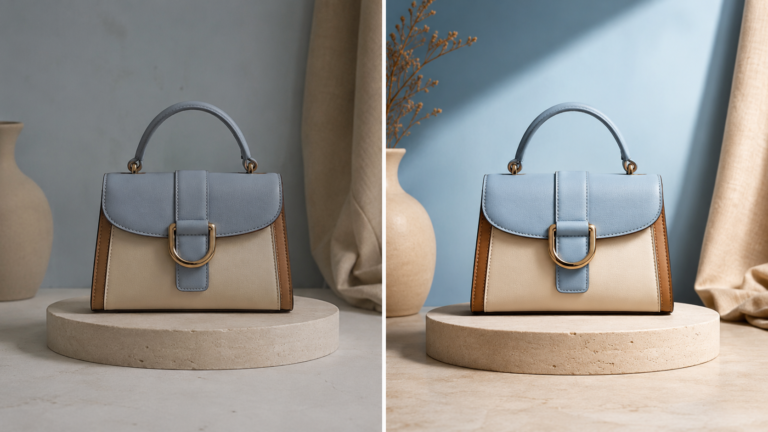
The “before and after” of fashion photography in e-commerce is a turning point for any brand. It shows, practically and undeniably, how image quality can transform not only aesthetics but also commercial results.
– Poor lighting: unwanted shadows and distorted colors that do not faithfully represent the product.
– Lack of framing: cropped or poorly positioned images that hinder product visualization.
– Absence of narrative: photos that only show the product without conveying lifestyle or emotion.
– Negative branding impact: conveys improvisation, lack of professionalism, and reduces brand credibility.
– Direct consequence: high cart abandonment rates and low conversion.
– Controlled lighting: faithful colors, highlighted textures, and evident details.
– Strategic composition: angles that highlight fit, proportion, and style.
– Visual narrative: each photo tells a story, connecting the product to the brand’s universe.
– Branding reinforcement: conveys sophistication, care, and exclusivity.
– Concrete results: increased conversion rates, longer site visits, and customer loyalty.
When customers see an amateur photo, they hesitate. When they see a professional photo, they imagine themselves wearing the product. This difference is decisive: consumers do not just buy clothes, they buy experiences and lifestyles.
E-commerce studies show that high-quality images can increase conversion rates. Additionally, products with professional photos are more likely to be shared on social media, expanding the brand’s organic reach.
The “before and after” is not just technical, it is strategic. It shows how professional photography can reposition a brand in the market. A fashion house that invests in quality images conveys exclusivity and desire, while a brand that neglects this aspect risks being perceived as generic.
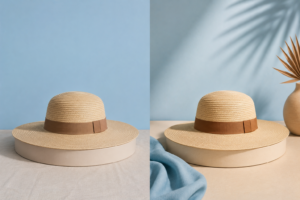
– Always choose superior quality to convey credibility. The difference between mobile photography and professional photography is decisive for branding:
– Maintain visual consistency across all campaigns.
– Highlight textures, fit, and finishes.
– Create narratives that connect product and lifestyle.
– Offer a variety of angles for a complete view of the piece.
– Align aesthetics with brand colors and values.
Brands that invested in fashion photography managed to reposition their image and conquer new markets. Examples can be seen in “Success Stories: Campaigns That Transformed Brand Image” .
Fashion editorials are much more than photo shoots: they are creative laboratories where brands build visual narratives that transcend the product. Unlike e-commerce, which focuses on immediate conversion, editorials work on memory and emotion.
A well-planned editorial translates the brand’s DNA into images that communicate values, lifestyle, and exclusivity. It creates symbolic universes that strengthen branding and position the brand at an aspirational level.
In editorials, there is room for boldness: unusual settings, dramatic lighting, artistic compositions. This aesthetic freedom allows the brand to differentiate itself and gain cultural relevance.
Well-executed editorial campaigns not only sell clothes but influence trends, shape behaviors, and consolidate the brand as a reference. This is where fashion photography becomes a branding tool as powerful as the design of the pieces themselves.
Fashion photography is not just aesthetics, but a strategic communication tool. For a brand to stand out in a saturated market, it must consider three fundamental pillars:
Maintaining a coherent photographic identity in campaigns, editorials, and e-commerce reinforces brand positioning. This creates immediate recognition and strengthens branding.
Each campaign must tell a story. Well-planned fashion photography translates values and emotions, creating connection with the audience.
Online, photography is the consumer’s first contact with the product. A well-produced image not only shows the piece but creates desire.
Clycz is a studio specialized in fashion photography that offers editorials and campaigns for brands and fashion houses. Our focus is to elevate branding, increase sales, and consolidate brand positioning.
With expertise in creating images that communicate desire and exclusivity, we help businesses stand out in a saturated market. Whether in editorial campaigns or e-commerce, our photography is designed to transform brand perception and generate tangible results.
*photography *fashion *editorials *campaigns *branding *flyhigh *clycz